The US and British governments knew where at least 80 of the Nigerian
girls kidnapped by Boko Haram were but failed to launch a rescue
mission, it has been revealed.
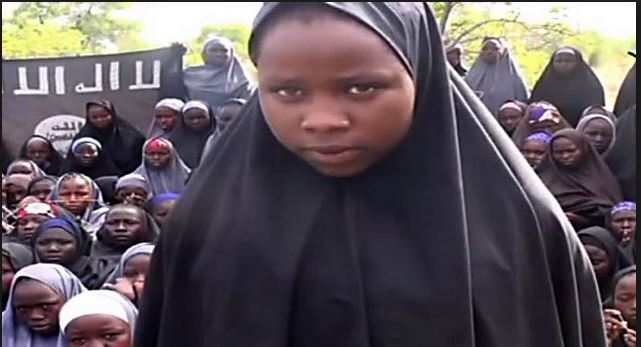
The Boko Haram terrorists stormed a secondary boarding school in the
remote town of Chibok in Borno state, northern Nigeria in April 2014,
and seized 276 girls who were preparing for end-of-year exams.
Although 57 of the girls managed to escape the rest have remained
missing and have not been heard from or seen since apart from in
May that year, when 130 of them appeared in a Boko Haram video
wearing hijabs and reciting the Quran.
Dr Andrew Pocock, the former British high commissioner to Nigeria,
has now revealed that a large group of the missing girls were spotted
by British and American surveillance officials shortly after their
disappearance, but experts felt nothing could be done.
He told The Sunday Times of London that Western governments felt
‘powerless’ to help as any rescue attempt would have been too high
risk – with Boko Haram terrorists using the girls as human shields. Dr
Pocock said: ‘A couple of months after the kidnapping, fly-bys and an
American eye in the sky spotted a group of up to 80 girls in a particular
spot in the Sambisa forest, around a very large tree, called locally the
Tree of Life, along with evidence of vehicular movement and a large
encampment.’ According to the report of Pocock’s interview with
Sunday Times, as published in the Daily Mail on Sunday, the former
envoy said the girls were there for at least four weeks but authorities
were ‘powerless’ to intervene – and the Nigerian government did not
ask for help anyway.
He said: ‘A land-based attack would have been seen coming miles
away and the girls killed, an air-based rescue, such as flying in
helicopters or Hercules, would have required large numbers and meant
a significant risk to the rescuers and even more so to the girls.’ He
added: ‘You might have rescued a few but many would have been
killed. My personal fear was always about the girls not in that
encampment — 80 were there, but 250 were taken, so the bulk were
not there. What would have happened to them? You were damned if
you do and damned if you don’t.’ In an investigation by Christina Lamb
for the Sunday Times Magazine, Dr Pocock said the information was
passed to the Nigerians but they made no request for help. According
to the report in Daily Mail, the Sunday Times Magazine has also seen
brutal rape videos which show schoolgirls are being used as sex
slaves by the terrorists.
Ms Lamb reports: ‘They film schoolgirls being raped over and over
again until their scream become silent Os.’ Some of the girls who
managed to escape told Ms Lamb they were kept in ‘women’s prisons’
where they were taught about Islam. Boko Haram fighters would visit
and pick their wives.
The girls were powerless to resist as even then the men would be
heavily armed. They were shown videos of people being raped, tortured
and killed as a threat of what would happen to them if they tried to run
away.
Dr Stephen Davis, a former canon at Coventy Cathedral who has spent
several years attempting to negotiate with the terror group said Boko
Haram ‘make Isis look like playtime’ and said it is ‘beyond belief’ that
the authorities both in Nigeria and the West do not know where the
schoolgirls are.
He insists the locations of the camps where the girls are being kept are
well known and can even be seen on Google maps. He added: ‘How
many girls have to be raped and abducted before the West will do
anything?’ Boko Haram leader Abubakar Shekau previously claimed
that all the girls, some of whom were Christian, had converted to Islam
and been ‘married off’.
The mass abduction brought the brutality of the Islamist insurgency to
worldwide attention and prompted the viral social media campaign
#BringBackOurGirls which was supported by everyone from Michelle
Obama to Malala Yousafzai.
Boko Haram violence has left at least 17,000 dead and forced more
than 2.6 million from their homes since 2009. The Global Terrorism
Index ranks the group as the word’s deadliest terror organisation.
Credit : Daily Mail UK